I'm no Tea Partier, but I tend to believe in limited government and lower taxes. Still, after several years of on-again, off-again thought, I've decided that health care has become a public good. Public goods require government regulation and so I've decided that I'm in favor of Obamacare. Here's why:
If you show up with a broken arm at a hospital emergency room, a doctor will fix your arm. If you don't have insurance, you'll pay out of pocket. If you can't afford to pay cash, what happens? I'll be honest, I'm no expert on health care. In fact, I totally botched my FSA savings account set-up in 2011 and accidentally gave away $400 hard-earned dollars to that great big FSA account in the sky. (Use-this-or-lose-this, jerks!) But I do know that someone pays. There's no such thing as a free cast. If not the patient or her health care insurance company, someone is paying for the doctor's time, the x-ray, the cast.
I suspect the hospital is footing the bill. To stay in business, the hospital (or health insurers or whoever is paying) must therefore charge paying customers more. This is one reason health care is expensive. (Other reasons include our insanely expensive high-tech approach to health care, the fact that we too often treat the symptom (diabetes) instead of the cause (bad diet, obesity, lack of exercise), and the fact that too many of us are a bunch of non-exercising chemical-laced lard eaters.)
It's undeniable that those with insurance are subsidizing those who can't pay their bills. That's unfair. Everyone should have health insurance so I don't have to pay for the health care of others. The only way this will happen is through an act of the government, hence Obamacare.
What about the uninsured unpoor, those who have no insurance yet can cover individual health care expenses? What happens to them in a health disaster, like a car accident or disease? If Obamacare reduces the cost of healthcare insurance*, the uninsured unpoor win twice. For them, insurance will cover routine care and disaster care at less cost than today's premium rates.
What about the rich who have insurance? Well, they have insurance, so there will be no penalty under Obamacare.
*Will Obamacare make health insurance less expensive? I think it will and here's why:
1. Obamacare makes health insurance more like a public utility. The act limits how much insurers can spend on things other than health care. It also restricts how quickly insurers can raise rates (no more than 10% a year without regulatory approval), which sounds like awfully good news to me. I believe my family's monthly insurance payment grew around 30% last year. Electricity and water are cheap and, in time, I think health care costs will fall as well. In fact, pretty much anything that becomes broadly adopted becomes more affordable.
2. Supply and demand. The supply and demand effect requires a little more thought. Sure, more customers means more demand. There are a limited number of insurers. More demand, same supply = higher prices. However! The service of health insurance is not really the same as a good, i.e. there is not a limited supply of insurance. In fact, more insured customers should actually increase the amount of insurance available. More people are healthy than unhealthy. More people are paying more than they cost.
3. Obamacare will increase competition among insurers. Okay, okay, if everyone's required to have insurance, then won't insurers make out like bandits not having to compete for customers? I don't think so. There are so many uninsured or underinsured Americans -- and so many people unsatisfied with their insurers -- that the state-run health care exchanges will give consumers the power to change insurers -- for the first time! With the option of affordable health care that's not tied to an employer, consumers will eventually be able to treat health care like car insurance. And let me tell how you excited I would be to get rid of "open season" in exchange for lizard-inspired ad campaigns.
Finally, Obamacare could mean huge savings for small businesses. As this Yale- and Harvard-educated foreign policy expert notes in this article in TIME magazine, affordable health care from exchanges may mean that employers will be able to stop offering health care coverage to employees.
I get that conservatives object to Obamacare because it's an expansion of government. That's true. It is an expansion of government. But you know what? We spend 12% of our nation's GDP on health care right now, far more than any modern industrialized nation that has some variety of national health care, and it's not like we're healthier than similar countries that spend far less.
Health care has become a public good and public goods require regulation. Obamacare means no more freeloaders, everyone paying a fair share, and a more thoughtful way to run health care.
Showing posts with label health. Show all posts
Showing posts with label health. Show all posts
Monday, March 26, 2012


Tuesday, August 16, 2011
Fitness Myth Busting
The ever insightful New York Times is running a series of fitness myth-busting articles this summer, and they're worth a look.
First is this one about warming up before exercising. In short, sports science says endurance athletes don't need nearly as much warm-up time as they think. This explains why I like Bobby McGee's approach: walk 5 minutes, do some dynamic warm ups (like easy stretching but with continuous movement), build into the workout.
Second is this article about endurance sport's 10% rule. I've always thought the rule of thumb -- don't increase your training load more than 10% a week -- was really conservative. It turns out the rule might not have any basis besides tradition.
This article busts no myth: it says that your best middle-aged mile run time is a reliable indicator of your risk of heart disease late in life. "The exercise you do in your 40s is highly relevant to your heart disease risk in your 80s." Cool! Now that's a payoff I can really appreciate.
Even modest exercise keeps you sane and sharp instead of nutty and senile, according to this recap of a new study.
Those silly looking "toning" shoes? They don't do a thing.
First is this one about warming up before exercising. In short, sports science says endurance athletes don't need nearly as much warm-up time as they think. This explains why I like Bobby McGee's approach: walk 5 minutes, do some dynamic warm ups (like easy stretching but with continuous movement), build into the workout.
Second is this article about endurance sport's 10% rule. I've always thought the rule of thumb -- don't increase your training load more than 10% a week -- was really conservative. It turns out the rule might not have any basis besides tradition.
This article busts no myth: it says that your best middle-aged mile run time is a reliable indicator of your risk of heart disease late in life. "The exercise you do in your 40s is highly relevant to your heart disease risk in your 80s." Cool! Now that's a payoff I can really appreciate.
Even modest exercise keeps you sane and sharp instead of nutty and senile, according to this recap of a new study.
Those silly looking "toning" shoes? They don't do a thing.
Monday, October 25, 2010
Sitting Kills: For Your Heart, There Is No Faking Fitness
In March, my life tally included a wife, a three-year old, and a condo. In two months, we sold our condo, moved into a rental place, had another kid, bought a house and moved in. During this time, I spent nearly 8 hours a day sitting at work, another few hours sitting at home (or packing boxes and lifting furniture), and the rest lying my back (sleeping). My exercise, other than walks to the park and wrangling kids, was running 3 miles or so every other day. I've been thin since birth, and my weight hasn't changed since 7th grade, so I consider myself reasonably healthy, even if I don't have the time I'd like to get more regular exercise.
So the article "The Men Who Stare at Screens" on NYTimes.com was disheartening and a little scary. To your heart, it doesn't really matter how much exercise you get if you spend most of your time on your butt.
"Men who spent more than 23 hours a week watching TV and sitting in their cars (as passengers or as drivers) had a 64 percent greater chance of dying from heart disease than those who sat for 11 hours a week or less. What was unexpected was that many of the men who sat long hours and developed heart problems also exercised...Their workouts did not counteract the ill effects of sitting...Your muscles, unused for hours at a time, change in subtle fashion, and as a result, your risk for heart disease, diabetes and other diseases can rise."
If this seems alarming, you should read the rest of the article. Basically, the modern workplace forces the white-collared to sit all day. Modern home life allows us the free time to be entertained via screen. We've replaced the daily light-intensity activities of our grandparents with screen time. We've become "active couch potatoes."
The study in the article relies on a measure called metabolic equivalent of task (MET). One MET is the amount of energy you burn lying down for one minute; it ain't much. Two METs would be twice as much energy as you would spend lying on the couch. I've wondered before if METs might be useful as a way to compare apples to apples efforts in different endurance sports.
As is often the case with New York Times fitness coverage, the story merely criticizes, offering no remedy. It would be useful, for example, to suggest MET guidelines on an hourly basis, even if they are a "GuesstiMET" on behalf of one of the researchers. Surely there was some threshold of light exercise apparent in the survey results; people are not merely active or inactive and there must have been some correlation to their health.
Anyway, you can download a list of daily activities and their MET score to help you make your own GuesstiMET of how often to take the stairs.
The Compendium of Physical Activities Tracking Guide (pdf)
UPDATE 1/15/11: The New York Times reports that screen time kills. The Well blog describes mounting evidence that, regardless of your exercise time, too much sedentary "activity" is very bad for your health. This is scary stuff for the white-collar class of professional sitters.
So the article "The Men Who Stare at Screens" on NYTimes.com was disheartening and a little scary. To your heart, it doesn't really matter how much exercise you get if you spend most of your time on your butt.
"Men who spent more than 23 hours a week watching TV and sitting in their cars (as passengers or as drivers) had a 64 percent greater chance of dying from heart disease than those who sat for 11 hours a week or less. What was unexpected was that many of the men who sat long hours and developed heart problems also exercised...Their workouts did not counteract the ill effects of sitting...Your muscles, unused for hours at a time, change in subtle fashion, and as a result, your risk for heart disease, diabetes and other diseases can rise."
If this seems alarming, you should read the rest of the article. Basically, the modern workplace forces the white-collared to sit all day. Modern home life allows us the free time to be entertained via screen. We've replaced the daily light-intensity activities of our grandparents with screen time. We've become "active couch potatoes."
The study in the article relies on a measure called metabolic equivalent of task (MET). One MET is the amount of energy you burn lying down for one minute; it ain't much. Two METs would be twice as much energy as you would spend lying on the couch. I've wondered before if METs might be useful as a way to compare apples to apples efforts in different endurance sports.
As is often the case with New York Times fitness coverage, the story merely criticizes, offering no remedy. It would be useful, for example, to suggest MET guidelines on an hourly basis, even if they are a "GuesstiMET" on behalf of one of the researchers. Surely there was some threshold of light exercise apparent in the survey results; people are not merely active or inactive and there must have been some correlation to their health.
Anyway, you can download a list of daily activities and their MET score to help you make your own GuesstiMET of how often to take the stairs.
The Compendium of Physical Activities Tracking Guide (pdf)
UPDATE 1/15/11: The New York Times reports that screen time kills. The Well blog describes mounting evidence that, regardless of your exercise time, too much sedentary "activity" is very bad for your health. This is scary stuff for the white-collar class of professional sitters.
Monday, May 10, 2010
Born to Run: Too Far a Leap
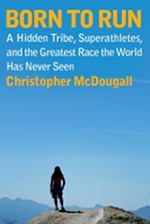
Christopher McDougall's book Born to Run is not about running, at least not what most of us consider to be running. Born to Run is a wide-ranging adventure story about elite, ultra-distance trail running, a cultish specialty of running that involves 50-mile races through wilderness terrain.
Ultra running shares little common ground with the intended reader of Born to Run, the average American runner. Hard-core ultra runners seem like rock climbers; McDougall describes dirtball outdoors people who camp out near trail systems to run all day and party all night. By contrast, the average American runner is delighted to run a few hours a week on sidewalks, roads, and paths. To say that Born to Run is about running would be more than a small stretch.
In Born to Run, McDougall describes the events leading to a 50-mile trail race through Mexico's Copper Canyon. The race features a handful of native Mexican runners and elite American trail runners, and McDougall builds the race into a clash of cultures. The Tarahumara Mexicans are an indigenous society of agrarian hunter-gatherers that practices long-distance running for sport and survival. The Americans are mostly professional ultra runners who run impressive distances -- 50-mile and 100-mile races are typical.
But McDougall's book is written more like fiction than nonfiction. He has a mythology -- the Tarahumara are like a mythical people living in Shangri-La where all societal evils are neutralized through running. The Tarahumara have no cancer or metabolic disease. They have no violence or theft. They have no concept of sexism. The Tarahumara are the perfect society, McDougall says, because of running.
McDougall explains that the Tarahumara began running to escape eradication at the hands of Spanish colonialism. The people were driven into Mexico's Copper Canyon, a brutal environment lacking water, farmland, and so baked under the hot Mexican sun that colonists could not give pursuit. Realistically, the Tarahumara are a destitute people who live hand to mouth in a lawless, cartel-infested Mexican desert because they have no choice and few opportunities. McDougall provides the historical context, but his book conjures innumerable opportunities to characterize the Tarahumara as an ideal society when, in fact, they are an unfortunate lot.
For McDougall, the Tarahumara way of running has a magical quality; he characterizes it as "easy, smooth, fast" with little motion above the waist, but it's difficult to imagine. This video profiles the Tarahumara and Caballo Blanco, the hero of Born to Run who organizes an annual Copper Canyon race between Tarahumara and Americans. You can watch them run.
To me, these runners simply look like people who run a lot. The Tarahumara are not magical runners; they simply look that much better when compared to the average running American.
Chapter 25 of Born to Run lays blame for bad American running at the feet of Nike. Educated runners (and anyone who reads the New York Times fitness section) know the story: padding reduces the sensation of impact when our feet hit the ground. Reducing the feeling of shock makes it seem as if running is more comfortable, so it changes how we run. Untrained runners wearing shoes tend to land their feet heel first into the ground. Barefoot runners tend to land farther forward on the foot. Many biomechanists have shown that padded shoes distort our naturally evolved running form and actually may cause injuries rather than prevent them. (Stay tuned for a VeloPress book on how to run with shoes as if you were barefoot.)
McDougall takes the blame a step farther, saying that Nike's padded shoes have caused far more than millions of running injuries, they've also turned people off running, which has led to obesity, metabolic disease, and cancer. In short, Nike is the root of all Western ailments. The book pretty much says this.
In all of Born to Run, only chapter 25 seems grounded in reality, mostly because McDougall so heavily relies on what seem like second-hand interviews of authoritative sources like academics and scientists from interviews in the New York Times and on National Public Radio (specifically this 1997 This American Life episode about persistence hunting.). Still, I feel the comparison between normal running and the running in Born to Run too far of a leap. Trail running is very different from road running, requiring very different motions. Perhaps trail running's soft surfaces and its inherent variety of motions reduce its incidence of injury. After all, trail running must mimic the conditions under which we evolved to run much more closely than the hard surfaces and repetitive motions of road running. Unfortunately, I'm aware of no studies comparing injury incidence between trail and road running.
It's easy to overlook an important point here: none of the characters in Born to Run run without shoes. The traditional Tarahumara -- not all of them -- run with tire treads laced to their feet. Take a look at the video above and you'll see that their tire tread shoes are at least a half-inch thick. Even the character "Barefoot Ted" runs with Vibram Five Fingers, though the book seems vague about how often he actually wore them. Born to Run's entire mythology is based on the benefits of running -- specifically barefoot running -- and McDougall proclaims that America would be a better place to live if we all ran barefoot... yet just one person in the book runs barefoot and only some of the time.
Even McDougall runs shod -- in Nikes nonetheless. McDougall says he was inspired to write the book while seeking a cure for his own running injuries. Along the way, he comes to believe that running shoes injured him, but his own description of his rehabilitation at the hands of a running coach illustrates that McDougall was simply another bad American runner. His coach teaches him proper run technique and McDougall is cured. His comeback is evidence that Born to Run is a work of fiction: McDougall keeps his shoes on and is cured long before he runs with the Tarahumara.
This is the great joke of Born to Run: its entire premise is detached from reality. Born to Run is a make-believe book. McDougall tells us we should all run trail ultra marathons. The average American runner, for very practical and sensible reasons, should be skeptical. McDougall proclaims the benefits of barefoot running, yet no one in the book runs barefoot and back in Kansas, few competitive runners seem interested. McDougall's hero, Caballo Blanco, nearly gets into a fistfight with Barefoot Ted over what Blanco considers to be Ted's ceaseless and suicidal evangelism of barefoot running.
Born to Run was an interesting and entertaining read, but the book requires suspension of disbelief from the first page to the end. Its writing style, which I've heard many compare to Outside magazine, is full of overstatement, jumped conclusions, and wondrous imagery. The day after I finished the book, I found myself Googling "Tarahumara" and "Caballo Blanco" during lunch at work.
I found this Running Times interview with Caballo Blanco. (The last question is telling.) I learned that, although the race has grown from 25 to 200 runners, the Tarahumara don't win Caballo Blanco's race anymore. I wonder how many Tarahumara compete for the corn and cash prizes for participants. You can read about Blanco's mission on his website.
Thursday, April 8, 2010
My Chemical Inventory, Or: Why the FDA Should Regulate Cosmetics

We humans expose ourselves to an astonishing number of chemicals. Chemistry is such a part of daily life that we rarely give a second thought to the chemicals surrounding us and in us. In fact, I suspect the average American hardly considers items like soap, toothpaste, hair conditioner to be chemicals. These and other household chemicals, through their everyday use, friendly packaging, and advertising, have become seemingly indispensable and positive additions to daily life.
The Environmental Working Group has been compiling a database of cosmetics and their ingredients since 2004. The database is called Skin Deep and it is partly user generated: website users submit a list of chemical ingredients from cosmetic packaging. Skin Deep cross-references cosmetic ingredients against 50 toxicity and regulatory databases of hazardous chemicals and rates the product with a safety score. Here is more info on Skin Deep.
As an exercise in cosmetic awareness, I submit to you my day in cosmetic chemistry.
The Environmental Working Group has been compiling a database of cosmetics and their ingredients since 2004. The database is called Skin Deep and it is partly user generated: website users submit a list of chemical ingredients from cosmetic packaging. Skin Deep cross-references cosmetic ingredients against 50 toxicity and regulatory databases of hazardous chemicals and rates the product with a safety score. Here is more info on Skin Deep.
As an exercise in cosmetic awareness, I submit to you my day in cosmetic chemistry.
Good Morning!
Brush teeth! Crest Baking Soda & Peroxide Whitening Toothpaste with Tartar Protection Fresh Mint
- Skin Deep hazard rating: 5 out of 10 (moderate hazard)
- Potential hazards: cancer, developmental/reproductive toxicity, violations, restrictions & warnings, allergies/immunotoxicity
- Ingredient count: 19
- Unspecified ingredient count: 1 (flavor)
- Chemical ingredients: Active Ingredients: Sodium Fluoride 0.243% (0.16% W/V Fluoride Ion) ; Inactive Ingredients: Glycerin; Hydrated Silica; Water; Propylene Glycol; Sodium Bicarbonate; Tetrasodium Pyrophosphate; Sorbitol; PEG-12; Flavor; Sodium Hydroxide; Sodium Lauryl Sulfate; Sodium Saccharin; Poloxamer 407; Xanthan Gum; Cellulose Gum; Calcium Peroxide; Titanium Dioxide; Blue 1
Rinse mouth with Up & Up Mouth Rinse Antiseptic (the Target house brand)
- Not yet rated in Skin Deep, but the preliminary rating is 4 out of 10 (moderate hazard)
- Potential hazards: cancer, Developmental/reproductive toxicity, Violations, restrictions & warnings, Other concerns for ingredients used in this product:
- Neurotoxicity, Persistence and bioaccumulation, Organ system toxicity (non-reproductive), Miscellaneous, Multiple, additive exposure sources, Irritation (skin, eyes, or lungs), Enhanced skin absorption, Occupational hazards
- Ingredient count: 13
- Unspecified ingredient count: 1 (flavor)
- Chemical ingredients: Active ingredients Eucalyptol 0.092%, Menthol 0.042% Methyl salicylate 0.060%, Thymol 0.064% Inactive ingredients water, alcohol 21.6%, sorbitol solution, flavor, poloxamer 407, benzoic acid, sodium saccharin, sodium benzoate, FD&C green no. 3
Cleanliness Is Godliness! Ivory Bar Soap, Simply Ivory
- Skin Deep hazard rating: 3 out of 10 (moderate hazard)
- Potential hazards: allergies/immunotoxicity, Other concerns for ingredients used in this product: neurotoxicity, organ system toxicity (non-reproductive), Miscellaneous, Irritation (skin, eyes, or lungs), Enhanced skin absorption, Occupational hazards
- Ingredient count: 13
- Unspecified ingredient count: 1 (fragrance)
- Chemical ingredients: Sodium Tallowate, Sodium Palmate, Water, Sodium Cocoate, Sodium Palm Kernelate, Glycerin, Sodium Chloride, Fragrance - Parfum, Coconut Acid, Palm Kernel Acid, Tallow Acid, Palm Acid, Tetrasodium EDTA
Clean that Mop! Avalon Organics Revitalizing Shampoo Peppermint
- Skin Deep hazard rating: 3 out of 10 (moderate hazard)
- Potential hazards: Allergies/immunotoxicity, Other concerns for ingredients used in this product: Organ system toxicity (non-reproductive), Multiple, additive exposure sources, Irritation (skin, eyes, or lungs), Enhanced skin absorption, Contamination concerns
- Ingredient count: 17
- Unspecified ingredient count: 1 ("other essential oils")
- Chemical ingredients: Purified water, cocamidopropyl betaine, disodium cocoamphodiacetate, sodium cocoyl sarcosinate, coconut acid, organic mentha piperita (peppermint) leaf(1), calendula officinalis (calendula) flower(1) and chamomilla recutita (chamomile) flower(2) extracts, organic orbignya oleifera (babassu) seed oil(3), babassuamidopropalkonium chloride, vegetable glycerin, bisabolol (chamomile), ethylhexylglycerin, arginine (amino acid), panthenol (pro-vitamin B5), tocopherol (vitamin E), organic mentha piperita (peppermint) leaf oil(2) and other essential oils. 1) Certified by Quality Assurance International 2) Certified by BCS Öko-Garamtie 3) Certified by Instituto Biodinâmico
Soft and Flowing Locks! American Crew Classic Stimulating Conditioner
- Not yet rated in Skin Deep, but the preliminary rating is 6 out of 10 (moderate hazard)
- Potential hazards: Developmental/reproductive toxicity, Violations, restrictions & warnings, Allergies/immunotoxicity, Other concerns for ingredients used in this product: Endocrine disruption, Organ system toxicity (non-reproductive), Multiple, additive exposure sources, Irritation (skin, eyes, or lungs), Enhanced skin absorption, Contamination concerns, Biochemical or cellular level changes
- Ingredient count: 18
- Unspecified ingredient count: 0
- Chemical ingredients: water; cetyl alcohol; dicetyldimonium chloride; ceteareth-20; rosemary leaf extract; thyme extract; panama bark extract; provitamin B5; stearamidopropyl dimethylamine; propylene glycol; citric acid; menthol; peppermint oil; limonene; methylparaben; propylparaben; methylisothiazolinone; methylchloroisothiazolinone
Postpone the Weekend Grizzle! Kiss My Face Moisture Shave fragrance free
- Skin Deep hazard rating: 5 out of 10 (moderate hazard)
- Potential hazards: cancer, developmental/reproductive toxicity, violations, restrictions & warnings, allergies/immunotoxicity; Other concerns for ingredients used in this product: Endocrine disruption, Organ system toxicity (non-reproductive), Multiple, additive exposure sources, Irritation (skin, eyes, or lungs), Enhanced skin absorption, Contamination concerns, Biochemical or cellular level changes
- Ingredient count: 27
- Unspecified ingredient count: 0
- Chemical ingredients: WATER, POTASSIUM MYRISTATE (DERIVED FROM VEGETABLE OILS), SODIUM MYRISTATE (DERIVED FROM VEGETABLE OILS), PROPYLENE GLYCOL, TEA STEARATE, COCONUT OIL, OLIVE OIL, ALOE VERA, VITAMINS A & D, TOCOPHEROL ACETATE (VITAMIN E), ALLANTOIN, LECITHIN, LIME EXTRACT, LADY'S MANTLE EXTRACT, SOAPWORT EXTRACT, PEPPERMINT EXTRACT, HORSETAIL EXTRACT, WATERCRESS EXTRACT, LEMONGRASS EXTRACT, SAGE EXTRACT, GOLDENSEAL EXTRACT, ORANGEFLOWER EXTRACT, HYDROXYETHYLCELLULOSE (PLANT SOURCE), METHYLPARABEN, PROPYLPARABEN, SODIUM BENZOATE
Lube the smackers! Burt's Bees Beeswax Lip Balm
- Skin Deep hazard rating: 2 out of 10 (low hazard)
- Potential hazards: allergies/immunotoxicity, Other concerns for ingredients used in this product: Organ system toxicity (non-reproductive), Enhanced skin absorption, Contamination concerns
- Ingredient count: 9
- Unspecified ingredient count: 0
- Chemical ingredients: COCONUT OIL, BEESWAX, SWEET ALMOND OIL, PEPPERMINT OIL, TOCOPHERYL ACETATE, TOCOPHEROL (VITAMIN E), LANOLIN, COMFREY ROOT EXTRACT, ROSEMARY EXTRACT
Gel the doo! Matrix Amplify Volumizing System Thick Boost gel
- Not yet rated in Skin Deep, but the preliminary hazard rating is 10 out of 10 (high hazard)
- Potential hazards: developmental/reproductive toxicity, violations, restrictions & warnings, allergies/immunotoxicity, Other concerns for ingredients used in this product: Neurotoxicity, Endocrine disruption, Persistence and bioaccumulation, Organ system toxicity (non-reproductive), Miscellaneous, Multiple, additive exposure sources, Irritation (skin, eyes, or lungs), Enhanced skin absorption, Contamination concerns, Occupational hazards, Biochemical or cellular level changes
- Ingredient count: 31
- Unspecified ingredient count: 1 (fragrance)
- Chemical ingredients: water; amp-acrylates/allyl methacrylate copolymer; pvp; peg-14 dimethicone; acrylates/C10-30 alkyl acrylate crosspolymer; propylene glycol; aminomethyl propanol; peg-40 hydrogenated castor oil; phenoxyethanol; polysorbate 80; peg-40; methylparaben; parfum/fragrance; ethylparaben; alpha-isomethyl ionone; ethylhexyl methoxycinnamate; hexyl cinnamal; butylphenyl methylpropional; linalool; benzyl salicylate; limonene; benzyl benzoate; citronellol; oleth-10; geraniol; disodium cocoamphodipropionate; octylacrylamide/acrylates/butylaminoethyl methacrylate copolymer; lecithin; phosphoric acid; polyquaternium-10; disodium edta;
Avoid stinky pits! Tom's of Maine original natural care odor protection aluminum-free deodorant stick
- Not yet rated in Skin Deep, but the preliminary rating is 3 out of 10 (moderate hazard)
- Potential hazards: Violations, restrictions & warnings, Allergies/immunotoxicity, Other concerns for ingredients used in this product: Organ system toxicity (non-reproductive), Irritation (skin, eyes, or lungs), Enhanced skin absorption, Occupational hazards
- Ingredient count: 11
- Unspecified ingredient count: 0
- Chemical ingredients: propylene glycol; water; sodium stearate; aloe barbadensis; witch hazel; glyceryl laurate; matricaria flower aqueous extract; hops; caprylic/capric triglyceride; ascorbic acid; cymbopogon schoenanthus oil
Banish scaly skin! Eucerin Dry Skin Therapy Daily Replenishing Lotion
- Not yet rated in Skin Deep, but the preliminary rating is 6 out of 10 (moderate hazard)
- Potential hazards: developmental/reproductive toxicity, violations, restrictions & warnings, allergies/immunotoxicity, Other concerns for ingredients used in this product: Neurotoxicity, Endocrine disruption, Persistence and bioaccumulation, Organ system toxicity (non-reproductive), Multiple, additive exposure sources, Irritation (skin, eyes, or lungs), Enhanced skin absorption, Contamination concerns, Occupational hazards, Biochemical or cellular level changes
- Ingredient count: 24
- Unspecified ingredient count: 0
- Chemical ingredients: water; sunflower seed oil; petrolatum; glycerin; glyceryl stearate SE; octyldodecanol; caprylic/capric triglyceride; stearic acid; dimethicone; cetearyl alcohol; lanolin alcohol; panthenol; tocopheryl acetate; cholesterol; carbomer; disodium EDTA; sodium hydroxide; phenoxyethenol; methylparaben; ethylparaben; propylparaben; butylparaben; isobutylparaben; bht
That's 182 chemicals in 10 cosmetic products (with some duplicate chemicals, of course), not including common chemicals in the municipal water supply like chlorine, flouride, pesticides, fertilizers, heavy metals, petrochemicals, dioxins, radioactive materials, bacteria or viruses, pharmaceuticals, and antibiotics. So mix those into my shower along with any residues that persisted on my skin overnight from the previous day.
And I haven't even left my own bathroom yet!
There are thousands of other daily chemicals to add to the stew:
There are thousands of other daily chemicals to add to the stew:
- flame retardants in furniture and carpets
- formaldehyde in plywood, particleboard, paneling, fiberboard, furniture, cabinets, etc.
- radon from your foundation
- phthalates in plastics, cosmetics, toys
- bisphenol A in type 7 plastics, can liners, and credit card receipts
- lead paints
- PFOA in non-stick surfaces like Teflon
- car exhaust: carbon monoxide, nitrogen dioxide, sulphur dioxide, breathable particles, benzene, formaldehyde, polycyclic hydrocarbons
- diesel exhaust: includes 40 carcinogens according to the EPA
- household cleaners
- hand soaps, dish soaps, laundry detergents, fabric softeners
No one knows how much of these chemicals it takes to cause problems over a lifetime. There is little known about how much of these chemicals enter and stay in the body. And no one knows how these hundreds of chemicals might interact in the body.
There are many things individuals can't control about our environment, but it's certainly possible to reduce the number, amount, and toxicity of chemicals in our cosmetics and households. I will definitely be pitching my hair gel, for example, and I'll look for alternative products that have a lower and more pronounceable ingredient list.
Take your own chemical inventory at Skin Deep. Then think about the fact that the American cosmetics industry is totally unregulated.
Photo by Horia Varlan.
Photo by Horia Varlan.
Friday, April 2, 2010
Obama's FDA Is Concerned About BPA
George W. Bush's FDA declared bisphenol-A, a widely used plastic chemical, to be safe for human ingestion. That's reassuring considering that all Americans carry detectable amounts in their bloodstream from can liners, polycarbonate plastic bottles, and credit card receipts.
However, W's FDA was criticized for its 2008 announcement and a FDA advisory panel later admitted that the FDA's statement was misguided.
In January, the FDA changed its position on BPA, stating that it was concerned about possible effects on fetuses, infants, and children.
Update, the EPA will investigate BPA's effects on the environment, particularly its effects on the reproductive systems of animals.
See this blog's BPA coverage here.
However, W's FDA was criticized for its 2008 announcement and a FDA advisory panel later admitted that the FDA's statement was misguided.
In January, the FDA changed its position on BPA, stating that it was concerned about possible effects on fetuses, infants, and children.
Update, the EPA will investigate BPA's effects on the environment, particularly its effects on the reproductive systems of animals.
See this blog's BPA coverage here.
Friday, November 6, 2009
Would You Like a Copy of Your Receipt?

Science News, a news magazine devoted to making the science behind new findings accessible to non-scientists, published this story revealing a surprising source for bisphenol-A contamination in humans--cash register and credit card receipts.
Photo credit: Yan-san via Flickr
Friday, October 23, 2009
It's a Good Thing Flu Season Is Off Season: Exercise and Immunity
The New York Times Well blog, in its ever-snarked, contrarian way, asked recently "Does Exercise Boost Immunity?". The answer: moderate exercise boosts the immune system and intense exercise hampers it.
This answer requires some explanation. What do moderate and intense mean and just how much boosting and hampering are we talking about?
According to this article, moderate exercise is compared to a leisurely jog or walk. For endurance athletes, a leisurely jog is a warm-up. Intense exercise is described as "a workout or race of an hour or more during which your heart rate and respiration soar and you feel as if you are working hard". For endurance athletes, this is 2 out of every 3 workouts.
The endurance athlete's "neck check" needs some refinement. The traditional guideline for endurance athletes is to go ahead with a workout if your illness is a head cold -- above the neck. If you're sick below the neck -- with a cough or something intestinal (or a fever) -- ditch the workout to avoid getting worse.
One expert interviewed said that "Moderate exercise...may prop up your immune response and lessen the duration and severity of a mild infection....It is okay to exercise if you have a simple head cold or congestion — in fact, it may improve the way you feel. I would avoid heavy, prolonged exercise with a head cold, though.".
So endurance athletes fighting a cold (or fighting to stay healthy in a germ-ridden workplace) should adjust their workout intensity. Skip the intervals and stick with easy, aerobic workouts like a zone 1-2 ride or base run for intervals.
Heck, isn't that what the off season is for?
Friday, August 21, 2009
SIGG bottles contained bisphenol-A
In a letter posted on the SIGG website this month, CEO Steve Wasik admitted that SIGG bottles manufactured prior to August 2008 contained the controversial chemical bisphenol-A (BPA).
Wasik's letter claims that all SIGG bottles manufactured after August 2008 use a new polyester-based liner that contains no BPA. He explains that (company sponsored?) laboratory testing had shown that the BPA-laced proprietary liner SIGG used did not leach BPA into common liquids like water, juice, soda, etc., and that SIGG continued to sell the BPA-lined bottles believing they were safe.
In an interesting marketing twist, the SIGG website shows consumers how to determine between pre- and post-August 2008 made bottles. I suppose SIGG loyalists (people who enjoy cute, $20 aluminum) may recycle their BPA bottles and replace them with the newer model.
Read SIGG's letter of admission.
The consumer blog Z Recommends offers a timeline of SIGG's misinformation campaign about BPA in its bottles.
SIGG clearly has violated consumer trust.
Read this blog's posts about bisphenol-A.
Wasik's letter claims that all SIGG bottles manufactured after August 2008 use a new polyester-based liner that contains no BPA. He explains that (company sponsored?) laboratory testing had shown that the BPA-laced proprietary liner SIGG used did not leach BPA into common liquids like water, juice, soda, etc., and that SIGG continued to sell the BPA-lined bottles believing they were safe.
In an interesting marketing twist, the SIGG website shows consumers how to determine between pre- and post-August 2008 made bottles. I suppose SIGG loyalists (people who enjoy cute, $20 aluminum) may recycle their BPA bottles and replace them with the newer model.
Read SIGG's letter of admission.
The consumer blog Z Recommends offers a timeline of SIGG's misinformation campaign about BPA in its bottles.
SIGG clearly has violated consumer trust.
Read this blog's posts about bisphenol-A.
Wednesday, July 22, 2009
"Funemployed" and Staycationers Boosting Endurance Sports

Back in February, I declared that triathlon is not recession-proof and made some predictions about what would happen to the sport during this recession. Since this recession is likely to continue into spring 2010, time will tell how right I am. Right now, though, I'm happy to report my wrongness.

This is a great time for some in the endurance sports industry, especially athletes and producers of lower price-point products.

Aside from the Slowtwitch.com poll I mentioned in my February post, the June issue of Runner's World magazine ran the first story I've seen addressing endurance sports and the economy. "Fiscally Fit" by Yishane Lee is a survey article of how the recession is affecting run.

Some of her findings:
- Runners are running more now than pre-recession
- Race attendance is up and registrations are filling up faster than usual
- Race entry fees haven't changed
- Corporate sponsorships--both for races and elite pro runners--are way down
Reed Albergotti at The Wall Street Journal has found that "funemployed" and furloughed athletes are spending more time training and racing. In his June 9 article, Fast Times for Jobless Runners: As Unemployed Amp Up Their Training, Marathon Results and Participation Rise, Reed shows not only that there are more runners, but also that they are actually faster!
Some highlights:
- Participation in 2009 is up over 5%.
- Marathons, triathlons, and road runs are filling registrations in record time. "With the economy in the doldrums, more people are discovering thatwithout those 12-hour workdays, they're able to pursue fitness goalslike never before."
- In 2009, 4.6% of marathoners could qualify for the Boston Marathon. That's a 39% increase over 2008.
- Average gym membership has actually risen 18% this year.
The main points:
- "Nationwide, several races appear to actually be prospering in the current economy." Even my hometown's Bolder Boulder 10K, which hit record participation numbers last year, "had its second highest number of entries and a record number of finishers."
- Endurance event race registrations, ranging from $70-$150, are cheap in comparison to travel and vacationing. By racing, endurance athletes are saving money. That's one way to "staycation".
Americans exercising? During a recession? We must reward these energetic people with The Pro Deal for All Americans!
UPDATE July 22: "Running for Lean Times" from the Wall Street Journal and "Spent, before race: Sales of marathon goods still strong" from the Boston Globe discuss the emotional benefits of running when times are tough and the shopping mentality of the "bucket list" marathon runner.
Friday, July 10, 2009
Do Kids Really Need Exercise?
The New York Times is many things and lately it seems to be a personal trainer. The Times "Well" blog, anchored by Tara Parker-Pope, is offering everything from free nutritional advice to free marathon training plans.
So I was a little surprised to see contrarian writer Gina Kolata questioning the common belief that kids need exercise. In "How Much Exercise Do Children Need?", Kolata argues, as is her familiar refrain, that there is little clinical research supporting the conventional wisdom. Kolata raises these points:
Okay, so there's no clinical research showing that kids need exercise. Do we really need clinical research to tell us this? Kids run everywhere. They play all the time. And when they don't, they get overweight in epidemic proportions. At any age, it's human nature to exercise, clinically proven or not.
So I was a little surprised to see contrarian writer Gina Kolata questioning the common belief that kids need exercise. In "How Much Exercise Do Children Need?", Kolata argues, as is her familiar refrain, that there is little clinical research supporting the conventional wisdom. Kolata raises these points:
- Research shows only small health improvements in some (not all) kids who exercise
- Kids don't get continuous exercise the way adults do. They exercise in spurts.
- There is no evidence that kids participate in their childhood sports in their adult lives. I.e. Soccer kids don't necessarily play adult league soccer.
- Active parents don't necessarily inspire activity in their kids. Adults often exercise away from home, so kids aren't exposed to exercise.
- The most physically active kids have close friends who are physically active.
- Kids are more likely to exercise when parents offer logistical support and help with daily living like making meals, driving to practices, etc.
- Half the kids drop out of sports programs by age 12 because they don't enjoy them. This is probably because many programs are overbooked and kids do "far too much standing around".
Okay, so there's no clinical research showing that kids need exercise. Do we really need clinical research to tell us this? Kids run everywhere. They play all the time. And when they don't, they get overweight in epidemic proportions. At any age, it's human nature to exercise, clinically proven or not.
Saturday, May 16, 2009
How to Buy and Apply Sunblock
The New York Times comments on this summer's impending SPF "arms" race:
"No SPF, not even 100+, offers 100 percent protection. What’s more, both UVA and UVB radiation can lead to skin cancer, which is why dermatologists now advise using sunscreens with an SPF of at least 15 and UVA-fighting ingredients like an avobenzone that doesn’t degrade in light or Mexoryl SX.
The difference in UVB protection between an SPF 100 and SPF 50 is marginal. Far from offering double the blockage, SPF 100 blocks 99 percent of UVB rays, while SPF 50 blocks 98 percent. (SPF 30, that old-timer, holds its own, deflecting 96.7 percent).
A sunscreen’s SPF number is calculated by comparing the time needed for a person to burn unprotected with how long it takes for that person to burn wearing sunscreen. So a person who turns red after 20 minutes of unprotected sun exposure is theoretically protected 15 times longer if they adequately apply SPF 15. Because a lot of sunscreens rub off or don’t stay put, dermatologists advise reapplication every two hours or after swimming or sweating."
"It has long been assumed that applying half the recommended ounce meant half the SPF protection. But a small 2007 study...found that 'If you apply half the amount, you get the protection of only the square root of the SPF.'...So applying a half-ounce of SPF 70 will not give you the protection of SPF 35, but 8.4."
"No SPF, not even 100+, offers 100 percent protection. What’s more, both UVA and UVB radiation can lead to skin cancer, which is why dermatologists now advise using sunscreens with an SPF of at least 15 and UVA-fighting ingredients like an avobenzone that doesn’t degrade in light or Mexoryl SX.
The difference in UVB protection between an SPF 100 and SPF 50 is marginal. Far from offering double the blockage, SPF 100 blocks 99 percent of UVB rays, while SPF 50 blocks 98 percent. (SPF 30, that old-timer, holds its own, deflecting 96.7 percent).
A sunscreen’s SPF number is calculated by comparing the time needed for a person to burn unprotected with how long it takes for that person to burn wearing sunscreen. So a person who turns red after 20 minutes of unprotected sun exposure is theoretically protected 15 times longer if they adequately apply SPF 15. Because a lot of sunscreens rub off or don’t stay put, dermatologists advise reapplication every two hours or after swimming or sweating."
"It has long been assumed that applying half the recommended ounce meant half the SPF protection. But a small 2007 study...found that 'If you apply half the amount, you get the protection of only the square root of the SPF.'...So applying a half-ounce of SPF 70 will not give you the protection of SPF 35, but 8.4."
Read the full article here.
Wednesday, April 22, 2009
Health News Roundup
Having Many Friends Is Good for Your Physical and Mental Health
In a 2006 study of cancer survivors, "proximity and the amount of contact with a friend wasn’t associated with survival. Just having friends was protective."
Fructoses Raises Your Bad Cholesterol and Triglycerides
"The researchers found that those study participants consuming fructose beverages had significantly increased blood levels of triglycerides and [bad cholesterol] compared to those consuming drinks sweetened with glucose."
Living Near a Highway Linked to Arthritis
"Researchers found that the women who lived within 55 yards of a large road had a 31 percent increased risk for rheumatoid arthritis compared with those living 220 or more yards away."
Even Skinny People Sporting a Gut Better Watch Out for Their Hearts
"The researchers found that a four-inch increase in waist size was associated with about a 15 percent increase in risk for heart disease, both in people of normal weight with a B.M.I. of 25 and in the obese with a B.M.I. above 30."
The Heart Can Grow Back...But Just a Little Bit
"About 1 percent of the heart muscle cells are replaced every year at age 25, and that rate gradually falls to less than half a percent per year by age 75, concluded a team of researchers."
Women Are Really Good at Smelling Body Odor
"For women, only two [fragrances] worked [to block their ability to smell] female odor, and none worked to hide male odor."
Breast-Feeding Benefits a Mother's Health
"Most doctors agree that breast-feeding is best for babies’ health. Now a large study suggests that the practice benefits mothers as well: women who have breast-fed, it says, are at lower risk than mothers who have not for developing high blood pressure, diabetes and cardiovascular disease decades later, when they are in menopause."
In a 2006 study of cancer survivors, "proximity and the amount of contact with a friend wasn’t associated with survival. Just having friends was protective."
Fructoses Raises Your Bad Cholesterol and Triglycerides
"The researchers found that those study participants consuming fructose beverages had significantly increased blood levels of triglycerides and [bad cholesterol] compared to those consuming drinks sweetened with glucose."
Living Near a Highway Linked to Arthritis
"Researchers found that the women who lived within 55 yards of a large road had a 31 percent increased risk for rheumatoid arthritis compared with those living 220 or more yards away."
Even Skinny People Sporting a Gut Better Watch Out for Their Hearts
"The researchers found that a four-inch increase in waist size was associated with about a 15 percent increase in risk for heart disease, both in people of normal weight with a B.M.I. of 25 and in the obese with a B.M.I. above 30."
The Heart Can Grow Back...But Just a Little Bit
"About 1 percent of the heart muscle cells are replaced every year at age 25, and that rate gradually falls to less than half a percent per year by age 75, concluded a team of researchers."
Women Are Really Good at Smelling Body Odor
"For women, only two [fragrances] worked [to block their ability to smell] female odor, and none worked to hide male odor."
Breast-Feeding Benefits a Mother's Health
"Most doctors agree that breast-feeding is best for babies’ health. Now a large study suggests that the practice benefits mothers as well: women who have breast-fed, it says, are at lower risk than mothers who have not for developing high blood pressure, diabetes and cardiovascular disease decades later, when they are in menopause."
Sunday, March 29, 2009
Dope Legally: Caffeine Is an Athlete's Best Friend
My favorite, over-cited news source, The New York Times, seems a little "behind the times" on this story, It’s Time to Make a Coffee Run.
"Starting as long ago as 1978, researchers have been publishing caffeine studies. And in study after study, they concluded that caffeine actually does improve performance. In fact, some experts, like Dr. Mark Tarnopolsky of McMaster University in Canada, are just incredulous that anyone could even ask if caffeine has a performance effect.“There is so much data on this that it’s unbelievable,” he said. “It’s just unequivocal that caffeine improves performance. It’s been shown in well-respected labs in multiple places around the world."
The truth about caffeine:
1. It's a performance enhancer. Caffeine allows us to burn fat instead of carbs, resulting on longer-lasting energy. It masks fatigue.
2. If you're a regular "user", it doesn't dehydrate you.
3. You only need a half cup of coffee (or two Cokes) to caffeinate your performance
4. It's 100% legal in every sport.
"Starting as long ago as 1978, researchers have been publishing caffeine studies. And in study after study, they concluded that caffeine actually does improve performance. In fact, some experts, like Dr. Mark Tarnopolsky of McMaster University in Canada, are just incredulous that anyone could even ask if caffeine has a performance effect.“There is so much data on this that it’s unbelievable,” he said. “It’s just unequivocal that caffeine improves performance. It’s been shown in well-respected labs in multiple places around the world."
The truth about caffeine:
1. It's a performance enhancer. Caffeine allows us to burn fat instead of carbs, resulting on longer-lasting energy. It masks fatigue.
2. If you're a regular "user", it doesn't dehydrate you.
3. You only need a half cup of coffee (or two Cokes) to caffeinate your performance
4. It's 100% legal in every sport.
Thursday, February 26, 2009
Choose Your Friends, Coworkers, and Friends' Friends Wisely
Science is beginning to learn that human beings are even more social than we'd realized.
Strangers May Cheer You Up, Study Says
"How happy you are may depend on how happy your friends’ friends’ friends are, even if you don’t know them at all. And a cheery next-door neighbor has more effect on your happiness than your spouse’s mood. So says a new study that followed a large group of people for 20 years — happiness is more contagious than previously thought." Click to continue.
Which is why it's so critical for our spouses to have a healthy work environment...
370: Ruining It for the Rest of Us
"A bad apple, at least at work, can spoil the whole barrel. And there's research to prove it. This American Life host Ira Glass talks to Will Felps, a professor at Rotterdam School of Management in the Netherlands, who designed an experiment to see what happens when a bad worker joins a team. Felps divided people into small groups and gave them a task. One member of the group would be an actor, acting either like a jerk, a slacker or a depressive. And within 45 minutes, the rest of the group started behaving like the bad apple. Felps found three types of bad apples:
1. the jerk
2. the slacker
3. the depressive pessimist
Click to continue on to the TAL website, where you can listen to the whole episode.
...and friends who don't smoke...
Study Finds Big Social Factor in Quitting Smoking
"Smokers tend to quit in groups, the study finds, which means smoking cessation programs should work best if they focus on groups rather than individuals. It also means that people may help many more than just themselves by quitting: quitting can have a ripple effect prompting an entire social network to break the habit." Click to continue.
...and friends who are thin...
Find Yourself Packing It On? Blame Friends
"Obesity can spread from person to person, much like a virus, researchers are reporting today. When one person gains weight, close friends tend to gain weight, too... Researchers report...that people were most likely to become obese when a friend became obese. That increased a person’s chances of becoming obese by 57 percent. There was no effect when a neighbor gained or lost weight, however, and family members had less influence than friends. It did not even matter if the friend was hundreds of miles away, the influence remained. And the greatest influence of all was between close mutual friends. There, if one became obese, the other had a 171 percent increased chance of becoming obese, too. The same effect seemed to occur for weight loss, the investigators say." Click to continue.
Strangers May Cheer You Up, Study Says
"How happy you are may depend on how happy your friends’ friends’ friends are, even if you don’t know them at all. And a cheery next-door neighbor has more effect on your happiness than your spouse’s mood. So says a new study that followed a large group of people for 20 years — happiness is more contagious than previously thought." Click to continue.
Which is why it's so critical for our spouses to have a healthy work environment...
370: Ruining It for the Rest of Us
"A bad apple, at least at work, can spoil the whole barrel. And there's research to prove it. This American Life host Ira Glass talks to Will Felps, a professor at Rotterdam School of Management in the Netherlands, who designed an experiment to see what happens when a bad worker joins a team. Felps divided people into small groups and gave them a task. One member of the group would be an actor, acting either like a jerk, a slacker or a depressive. And within 45 minutes, the rest of the group started behaving like the bad apple. Felps found three types of bad apples:
1. the jerk
2. the slacker
3. the depressive pessimist
Click to continue on to the TAL website, where you can listen to the whole episode.
...and friends who don't smoke...
Study Finds Big Social Factor in Quitting Smoking
"Smokers tend to quit in groups, the study finds, which means smoking cessation programs should work best if they focus on groups rather than individuals. It also means that people may help many more than just themselves by quitting: quitting can have a ripple effect prompting an entire social network to break the habit." Click to continue.
...and friends who are thin...
Find Yourself Packing It On? Blame Friends
"Obesity can spread from person to person, much like a virus, researchers are reporting today. When one person gains weight, close friends tend to gain weight, too... Researchers report...that people were most likely to become obese when a friend became obese. That increased a person’s chances of becoming obese by 57 percent. There was no effect when a neighbor gained or lost weight, however, and family members had less influence than friends. It did not even matter if the friend was hundreds of miles away, the influence remained. And the greatest influence of all was between close mutual friends. There, if one became obese, the other had a 171 percent increased chance of becoming obese, too. The same effect seemed to occur for weight loss, the investigators say." Click to continue.
Tuesday, January 27, 2009
Mercury Never Tasted Better!
The U.S. media is in a tizzy about a report that has found detectable levels of mercury in 50% of all high-fructose corn syrup and nearly 33% of 55 popular name-brand foods for which high-fructose corn syrup is one of the key ingredients.
This USA Today article links out to the study, the report, and the list of 55 mercury-containing foods. Of the 17 products found to contain mercury, I've eaten at least 10 of them. These are the ones that are in my fridge or pantry right now (but not for long):
Score another blow for the U.S. Food and Drug Administration and against the American consumer!
For the other side, please refer to the Corn Refiners Association, which claims that high-fructose corn syrup is safe because it has been made without the use of mercury "for several years". Comforting.
One of the study's authors admits that 90% of U.S. production of high-fructose corn syrup is made without the use of mercury (leaving 10%!), but also that the ingredient is produced globally and imported.
Finally, "detectable" does not mean "dangerous". The conventional wisdom is that no amount of mercury is safe to consume, especially for kids, babies, and pregnant women, but toxicologists love their mantra that "dose is everything". A ConAgra spokesperson said that someone would have to eat 100 lbs. of Hunt's Tomato Ketchup per day to approach the EPA's stated maximum safe limit.
This USA Today article links out to the study, the report, and the list of 55 mercury-containing foods. Of the 17 products found to contain mercury, I've eaten at least 10 of them. These are the ones that are in my fridge or pantry right now (but not for long):
- Hershey's Chocolate Syrup
- Coca-Cola Classic (maybe)
- Smucker's Strawberry Jelly
- Nesquik Chocolate Milk
Score another blow for the U.S. Food and Drug Administration and against the American consumer!
For the other side, please refer to the Corn Refiners Association, which claims that high-fructose corn syrup is safe because it has been made without the use of mercury "for several years". Comforting.
One of the study's authors admits that 90% of U.S. production of high-fructose corn syrup is made without the use of mercury (leaving 10%!), but also that the ingredient is produced globally and imported.
Finally, "detectable" does not mean "dangerous". The conventional wisdom is that no amount of mercury is safe to consume, especially for kids, babies, and pregnant women, but toxicologists love their mantra that "dose is everything". A ConAgra spokesperson said that someone would have to eat 100 lbs. of Hunt's Tomato Ketchup per day to approach the EPA's stated maximum safe limit.
Saturday, November 1, 2008
FDA agrees its August statement on BPA was wrong
From this Washington Post article (10/31/08):
"A U.S. Food and Drug Administration advisory panel agreed Friday that the agency had erred in August when it said that a chemical widely used in baby bottles and other plastic packaging for foods and beverages posed no health risks."
"On Wednesday, a panel of toxicology experts said the FDA hadn't properly assessed the potential health risks posed by the chemical bisphenol A (BPA), which some studies have linked to cancer, diabetes, heart disease and developmental delays in children. The toxicologists said the FDA had relied too heavily on studies funded by the chemical industry to make its decision."
"On Friday, the FDA's Science Board, which consists of scientists from academia, government and industry and advises the FDA commissioner, seconded the toxicologists' concerns about the FDA's August ruling."
"The FDA's position on BPA has been controversial because it contradicted more than 100 studies, as well as a finding by the U.S. National Toxicology Program, that there was "some concern" that BPA may affect the brain and behavioral development in fetuses, infants and small children."
"A U.S. Food and Drug Administration advisory panel agreed Friday that the agency had erred in August when it said that a chemical widely used in baby bottles and other plastic packaging for foods and beverages posed no health risks."
"On Wednesday, a panel of toxicology experts said the FDA hadn't properly assessed the potential health risks posed by the chemical bisphenol A (BPA), which some studies have linked to cancer, diabetes, heart disease and developmental delays in children. The toxicologists said the FDA had relied too heavily on studies funded by the chemical industry to make its decision."
"On Friday, the FDA's Science Board, which consists of scientists from academia, government and industry and advises the FDA commissioner, seconded the toxicologists' concerns about the FDA's August ruling."
"The FDA's position on BPA has been controversial because it contradicted more than 100 studies, as well as a finding by the U.S. National Toxicology Program, that there was "some concern" that BPA may affect the brain and behavioral development in fetuses, infants and small children."
Tuesday, October 28, 2008
Counting Calories to Become Law?
The New York Times has reported that "nearly three dozen states, cities and counties have passed or introduced laws that would require calorie posting in some form... Two proposals moving through Congress would make calorie postings uniform nationwide."
"The makers of Coca-Cola and M&Ms will soon print calories on the front of packages...New Yorkers got a harsh dose of calorie reality this summer when restaurants with 15 or more outlets were forced to post the calorie content of food next to the price."
Food makers are jumping on the calorie counting trend by reducing portion sizes and posting caloric ratings on their menus. But are they reducing the price? Don't be silly!
"The makers of Coca-Cola and M&Ms will soon print calories on the front of packages...New Yorkers got a harsh dose of calorie reality this summer when restaurants with 15 or more outlets were forced to post the calorie content of food next to the price."
Food makers are jumping on the calorie counting trend by reducing portion sizes and posting caloric ratings on their menus. But are they reducing the price? Don't be silly!
Chemical Industry Wrote FDA's Bisphenol-A Assessment
The Milwaukee Journal Sentinel has reported that the American Chemistry Council, a trade association and lobbying organization representing the chemical industry, wrote much of the FDA's August assessment of bisphenol-A.
A day after the Journal Sentinel ran its story, a group of scientists criticized the FDA for allowing this obvious conflict of interest.
The Environmental Working Group has been criticizing the FDA's position on BPA since this spring and offers this brief review of the conflicts of interest involved.
See all Mediocre Polymath posts about bisphenol-A.
A day after the Journal Sentinel ran its story, a group of scientists criticized the FDA for allowing this obvious conflict of interest.
The Environmental Working Group has been criticizing the FDA's position on BPA since this spring and offers this brief review of the conflicts of interest involved.
See all Mediocre Polymath posts about bisphenol-A.
Tuesday, August 19, 2008
Congress passes law to make toys safer
In early August, The New York Times editorial page took a rare opportunity to praise Congress for passing legislation that would:
This is great news. Too bad it only took 30 million recalled toys, lead poisonings, powdered asbestos, and necklaces laced with the date rape drug to inspire some Congressional action.
- ban lead in toys intended for children under the age of 12
- require safety testing of children's toys before they could be put on sale
- permanently ban three types of phthalates and temporarily ban three more types
- raise the budget for the Consumer Product Safety Commission
- mandate a database of products that consumers could complain about
This is great news. Too bad it only took 30 million recalled toys, lead poisonings, powdered asbestos, and necklaces laced with the date rape drug to inspire some Congressional action.
Subscribe to:
Posts (Atom)